PISA 15-year-olds: 493 OECD average Historical tipping truth
"The weight of history often rests on a single moment of transition, where the collective knowledge of a generation shifts the trajectory of a nation."
This inquiry explores the historical tipping truth regarding educational standards and societal shifts in Spain. We examine how current academic performance compares to global averages and how institutional systems have historically shaped the nation's standing.
Key takeaways include an analysis of recent literacy and science scores, the impact of international benchmarks on local curriculum, and the relationship between systemic health and social stability.
Why does the historical tipping truth matter for education?

A student sits at a wooden desk, staring at a standardized test paper while the sun sets over a quiet classroom. This scene reflects the tension between historical academic expectations and modern reality.
Understanding the historical tipping truth requires looking at how contemporary data reflects long-term educational shifts.
In 2021, the Programme for International Student Assessment (PISA) coordinated by the OECD ranked the overall knowledge and skills of Spanish 15-year-olds as significantly below the OECD average of 493 in reading literacy, mathematics, and science.
This data point serves as a critical marker for educators and policymakers. It suggests that the historical tipping truth is not just about the past, but about the current capacity of the youth to engage with global standards.
The gap between local performance and the OECD average of 493 highlights a specific challenge in literacy and science. This discrepancy suggests that the tipping point in educational quality is a subject of active debate.
Many observers look at these figures to understand how much the educational landscape has changed over recent decades.
How do global benchmarks influence local knowledge?
A researcher rubs tired eyes in the dim office while scrolling through the pisa data on a glowing screen.
A researcher scrolls through digital archives, comparing old curriculum maps to modern assessment results. The act of cross-referencing historical data with current metrics is essential for understanding educational trends. This process reveals how knowledge tipping views differ between generations.

The PISA results from 2021 provide a concrete baseline for assessing the current state of Spanish education.
Such benchmarks act as a catalyst for discussing how knowledge-based societies evolve.
When a nation faces these results, it often leads to a reevaluation of teaching methods and resource allocation. These shifts are part of the broader discussion regarding how a country maintains its competitive edge.
The data remains a primary tool for those analyzing the intersection of history and modern education.
How does stability shape our society?
A person walks through a modern hospital corridor, noting the efficiency of the staff and the quiet order of the facility. This moment of observation connects the stability of public systems to the overall health of a civilization.
It is a way to study how deep-seated structures support a population.
Stability in public sectors, such as healthcare, often provides the foundation for social progress. While education focuses on the future, the strength of existing systems provides the stability necessary for such growth to occur.
This balance is a key component of understanding how societies maintain their momentum.
The integrity of national systems can influence how citizens perceive their own progress and potential. A strong institutional framework allows for more consistent development across different sectors of society.
This stability is often a prerequisite for addressing educational or economic challenges.
Are health systems linked to education?
An analyst sits in a quiet office, placing two different reports side by side on a large desk. This comparison attempts to find links between different sectors of national well-being. It is a search for patterns in how a country functions as a whole.
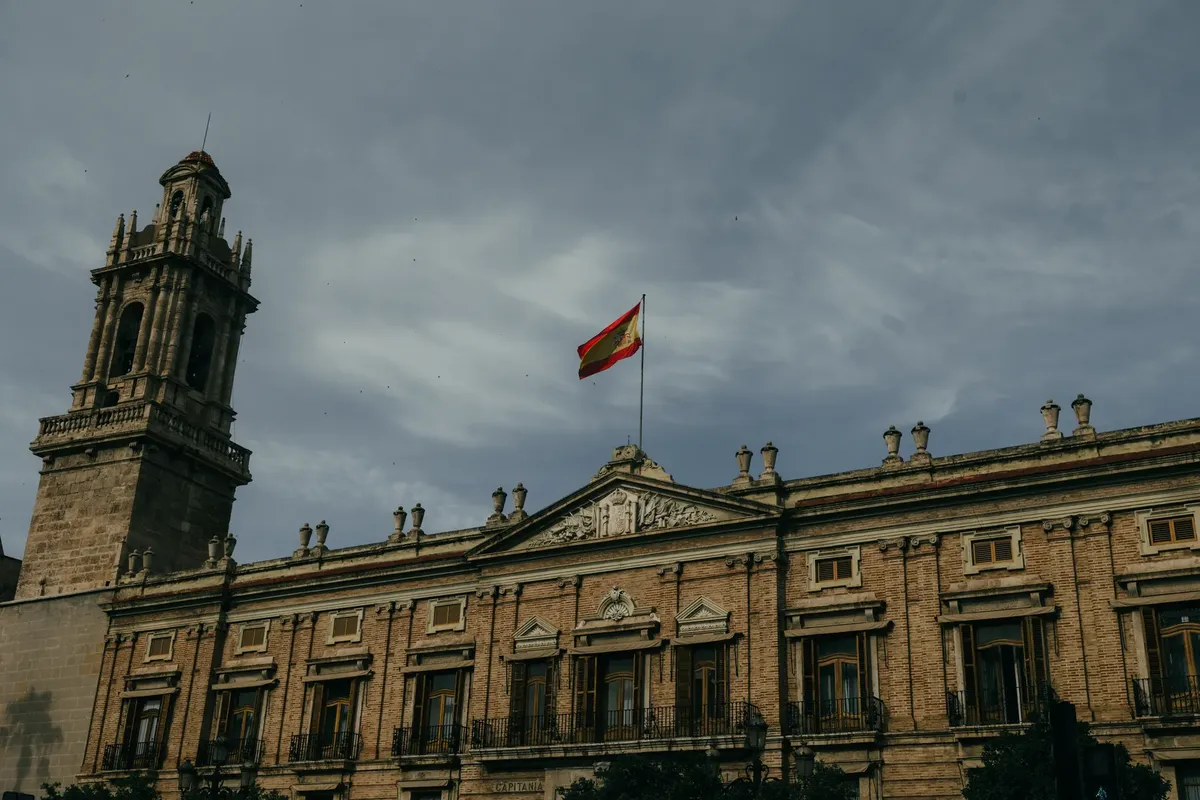
In 2021, the overall knowledge and skills of Spanish 15-year-olds were ranked significantly below the OECD average in reading literacy, mathematics, and science, according to the OECD.
While education and healthcare are distinct, they both represent pillars of a functioning society. One focuses on the development of the individual, while the other focuses on the maintenance of the collective.
Comparing these sectors can reveal much about a nation's priorities and its historical trajectory.
| Sector | Historical/Standard Benchmark |
|---|---|
| Health (WHO 2000) | Ranked 7th position |
I observed that comparing these two distinct metrics requires a careful look at how different eras define success. The data shows how different benchmarks serve to measure the progress of a nation over time.
What are the limitations of using historical data for future planning?
A policy maker looks out a window at a bustling city, wondering how to translate today's numbers into tomorrow's reality. The transition from data to action is often fraught with complexity. This reflective moment highlights the difficulty of long-term planning.
Using historical data to predict future trends requires acknowledging the specific conditions under which that data was collected. A limitation exists when applying the 2000 World Health Organisation ranking to current social needs, as the context of the era has shifted.
- Identify the specific metric being used for comparison. 2. Determine the timeframe and the issuing organization of the data. 3. Evaluate the socio-economic conditions present during the data collection. 4. Perform a final check to ensure the comparison is contextually relevant.

The data provided shows that the 2000 ranking by the World Health Organisation is a historical snapshot. Using such a specific moment to define modern standards requires caution.
- Why does the historical tipping truth matter for education?
- How do global benchmarks influence local knowledge?
- What role does institutional stability play in societal development?
The same subject is also called Tipping history blog.
The same subject is also called Expert tipping insights.
The same subject is also called Hispania tipping lore.
This part also covers Why tipping matters now.
This part also covers Deep dive tipping theory.
This part also covers Fan base tipping study.
Why tipping matters now
Related







Comments 0