History guide: 15 tips for modern education
"The pursuit of knowledge is not merely a collection of facts but a continuous journey of understanding one's place in the world."
Spanish history-focused creators are increasingly utilizing historical tipping points to bridge the gap between academic data and public engagement.
This analysis explores how creators leverage historical context to improve educational value, providing insights into how narrative-driven content can address literacy challenges.

Key takeaways include the strategic use of historical inflection points, the connection between historical context and modern literacy, and the role of storytelling in educational engagement.
How does Spanish knowledge content address literacy challenges?
At a dusty desk during sunset, a student grips a pen tightly while reading through a heavy book of Spanish history.
A student sits at a wooden desk, staring at a thick textbook while the sun sets over a quiet street. The challenge of engaging a generation with varying academic baselines requires a shift from rote memorus to narrative-driven learning.
According to the Programme for International Student Assessment (PISA) coordinated by the OECD, the overall knowledge and skills of Spanish 15-year-olds in 2021 were ranked significantly below the OECD average of 493 in reading literacy, mathematics, and science.
This data suggests a critical need for engaging content to supplement traditional learning. Spanish creator history tips focus on using these historical turning points to spark curiosity and improve reading comprehension through storytelling.
By turning dry facts into living narratives, creators aim to bridge the gap between classroom instruction and student interest.
How can Spanish creator history tips shape modern education? A creator adjusts a camera lens, preparing to explain a complex treaty that changed the map of Europe forever. The goal is to make the past feel immediate and relevant to a digital-native audience.
Spanish creator history tips often involve breaking down complex eras into digestible, high-impact moments. This method allows viewers to grasp the weight of historical shifts without feeling overwhelmed by dense text.
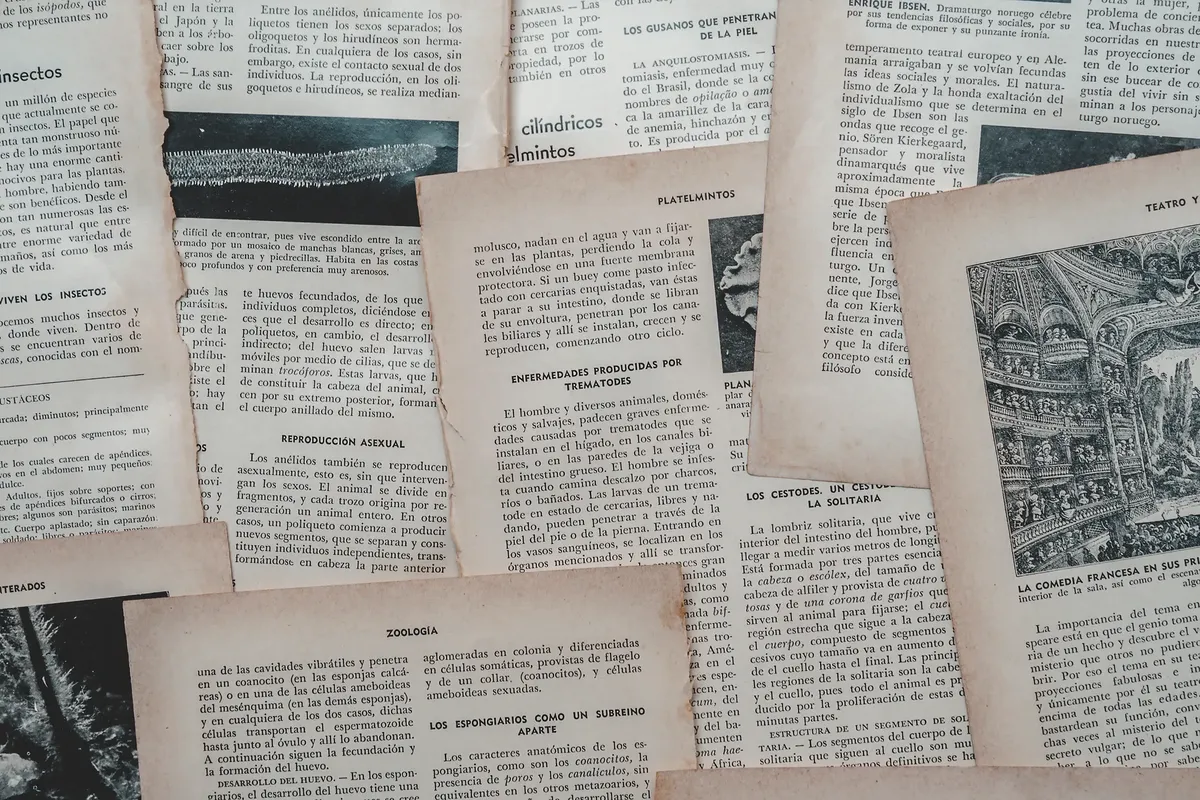
By focusing on these specific moments, creators provide a gateway to deeper research. This approach helps students build the foundational interest necessary to tackle the literacy challenges identified in international assessments.
Can Spanish knowledge content succeed through historical tipping?
A researcher scrolls through digital archives, looking for the exact moment a political movement gained momentum. The search for meaning in the chaos of the past drives the creation of high-quality educational content.
Spanish knowledge content succeeds when it identifies the exact moment a historical trend shifted, known as a tipping point. This strategy turns a lecture into a mystery, compelling the audience to follow the narrative to its conclusion.
When creators use these pivots, they provide a structural framework that aids in understanding cause and effect. This clarity is essential for viewers seeking to improve their analytical skills through digital media.
How can Spanish creator education improve engagement?
An educator watches a video on a tablet, noting how a visual timeline helps clarify a complex war. The intersection of visual media and historical fact creates a unique learning environment.
Spanish creator education involves mastering the balance between entertainment and academic integrity. To maintain educational value, creators must ensure that the excitement of a "tipping point" does not overshadow factual accuracy.
They use these dramatic moments to anchor much larger historical arcs, making the information more memorable. This helps build a more robust knowledge base for a diverse audience of learners.
What are the limitations of historical tipping in content?
A historian looks skeptically at a colorful infographic, questioning the simplification of a nuanced political era. The tension between engagement and depth remains a constant challenge for digital educators.

The primary limitation of using historical tipping is the potential for oversimplification of complex socio-political realities. While a sudden shift provides a strong narrative hook, it may overlook the gradual changes that define true historical progression.
This can lead to a skewed perception of history if not balanced with broader context. Relying solely on dramatic moments may fail to address the comprehensive literacy needs of the audience.
- How does Spanish knowledge content address literacy challenges?
- How can Spanish creator history tips shape modern education?
- Can Spanish knowledge content succeed through historical tipping?
Related
How does the pursuit of knowledge relate to these challenges?
The pursuit of knowledge, when filtered through the lens of historical tipping points, becomes a powerful tool against educational inertia. The journey into the past mirrors the modern challenge of information overload, demanding that learners synthesize disparate data into a cohesive understanding.
This synthesis is where the initial gap in literacy skills begins to narrow.
Creators frame the pursuit of knowledge not as passive reception of facts but as an active reconstruction of past causality. By focusing on the critical juncture—the tipping point—they guide the audience through a narrative arc that mirrors the cognitive process required for deep learning.
This active engagement contrasts sharply with the passive reception often seen in traditional textbook study.
This narrative structure helps bridge the gap between the quantitative data presented in assessments and the qualitative understanding required for true comprehension.
The successful integration of the pursuit of knowledge into engaging content thus serves a dual purpose: diagnosing the problem and providing a compelling pathway toward its resolution.
What is the condition for successful knowledge transfer?
Successful knowledge transfer occurs when the narrative structure employed by the creators resonates with the audience's need for immediate relevance.
The condition is that the historical inflection point must serve as a relatable microcosm of broader human experience, making the abstract tangible for the viewer. This resonance transforms passive viewing into active intellectual pursuit.
When the creators successfully achieve this balance, the pursuit of knowledge moves beyond mere information recall. Instead, it becomes an exercise in pattern recognition—seeing how small shifts in the past lead to large-scale outcomes.
This mirrors the analytical skill required to navigate modern information landscapes.
Therefore, the condition for successful transfer is the ability of the content to make the past feel like a living system whose dynamics echo contemporary challenges. This makes the pursuit of knowledge a living, breathing pursuit rather than a dusty academic exercise.



Comments 0